News
Jackson Browne on cancel culture, his ‘shelf life’ and how to survive rush hour in L.A.
July 27, 2021
BY AMY KAUFMANSTAFF WRITER JULY 26, 2021 5 AM PT
Jackson Browne knows people think he’s past his prime. Or “way out over my due date,” as he puts it on his new album.
“I’m talking about shelf life,” he says. “But I think a lot of stuff is still good after the date that’s printed on the package.”
At 72, the musician is grappling with what his life will amount to — that’s really what the lyric is about, he says: “An admission that you’re supposed to have settled stuff by this time.”
It’s not that he had a vision for what life in his 70s would be like; he’s never looked that far into the future. But he has always been a self-reflective sort, unafraid to question whether he’s squeezing all of the juice out of the fruit. Even one of his first hits, “Doctor, My Eyes” — released in the midst of the Vietnam War — told the story of a man puzzling over how to digest the hardships of the world.
Browne’s eyes are still wide open on “Downhill From Everywhere,” the Rock & Roll Hall of Fame inductee’s first collection of new music in six years. On the album, the singer-songwriter takes typically forthright stands on ocean pollution, immigration rights and gay marriage. Though he grows somber when he discusses current events, Browne also seems to have softened with age — exuding less of an obstinate attitude than an equable one.
In the late ‘60s and ‘70s, Browne established himself as one of Laurel Canyon’s preeminent songwriters with now-standards like “These Days” (written when he was 16), “Take It Easy,” co-written with the Eagles’ Glenn Frey and “Running on Empty.” Back-to-back smash albums “The Pretender” and “Running on Empty” made him a full-fledged rock star, but gradually he would pivot his music and career away from pop philosophy and toward the political. He organized “No Nukes” benefit concerts against nuclear weapons and nuclear energy alongside Graham Nash and Bonnie Raitt in 1979 and condemned U.S. policy in Central America on his 1986 album “Lives in the Balance.”
Browne still champions numerous causes; he was performing at a fundraiser for the charity God’s Love We Deliver in March 2020 when he became one of the first stars to contract COVID-19. He likes experimental theater — he’s wearing a shirt from Tim Robbins’ Culver City-based the Actors’ Gang nonprofit — and seeing live music with some of the young artists he’s befriended, like Dawes, Jenny Lewis, Inara George and Phoebe Bridgers. (Earlier this year, Bridgers enlisted Browne to duet with her on a new version of her song “Kyoto,” and she in turn then appeared in a music video for his song “My Cleveland Heart.”)
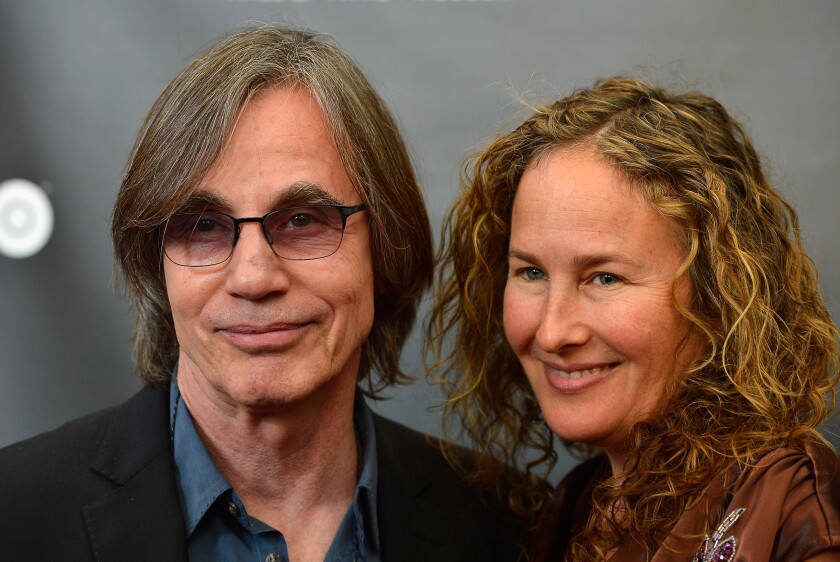
Browne, who lives in Los Angeles’ Mid-City with his longtime partner, Dianna Cohen, has two adult children from previous marriages.
This week, he heads out on a three-month tour with James Taylor that will stop in Anaheim in October. The Times spoke with Browne at his Santa Monica recording studio, Groove Masters, where Bob Dylan, Frank Ocean and David Crosby have made music.
What made you decide to record an album after six years?
The way you pose the question presupposes that there’s getting ready. I’ve had a studio for 30 years. I’m always doing something. It’s more like there’s a residue you gather or a condensation that gathers.
You once said that your standards plague you. Do you still feel that way?
I think I was talking about the fact that it’s not a good idea to try to write a song as good as some other song you’ve already written. Because when you wrote that song that you thought so highly of, you weren’t holding it up to some other standard; you were just trying to write something new. Look, I’ve got a high opinion of some of my songs, but to write something new you have to forget everything you’ve ever done.
You sing on this album about being concerned for the future your children will inherit. What scares you?
I am in a state of grief for the world that my kids are inheriting — my grandson. Elephants and tigers are in danger. The ocean’s got dead spots in it. The reefs are dying. The natural world’s ability to bounce back from what we’ve done is an existential threat. … We’ve got these electric cars, so why don’t more people have electric cars? Why don’t we phase out fossil fuels? They won’t until they’ve sold us every last thing they have. I don’t get to talk about this stuff very much in conversation. So for me, the challenge is to write a song that people don’t mind hearing and that helps galvanize some sort of feelings or helps them find some resolve.
When you started more politically themed music in the 1980s, were you worried about losing your audience?
I know it was considered problematic by some people in the music industry to talk about politics. But they were never my people. You hear people like, ‘Oh, he’s losing an enormous part of his audience by talking about this.’ They’re talking about sales and s— like that. That never mattered to me anyway. Please.
It didn’t matter to you at all?
When you sing about stuff that nobody knows anything about, the recognition for what you’re doing is gonna drop off. At the same time, a bunch of other things were happening that are probably more responsible for the popularity declining, like punk music. You’re just not 25, now you’re 33, and there’s a completely different aesthetic going on and an attitude about everything that’s come before, rightfully or wrongfully dismissing you.
Many of your reviews cite you as being a really serious person. Do you think that’s fair?
I’ve had people remark on that to me, like, “Oh, I expect you to come in with sheaths of newspapers and notes and stuff.” There was this great remark that Don Was made. He was asked about a song that was political, and he said, “Oh yeah, we’re kind of political. Well, we’re not like Jackson Browne, where we’re with a pointer and talking about troop movements.” It was a funny thing to say.
I was playing at a Christmas show in Asheville a few years ago, and I sang this song about war called “The Drums of War.” Later, I was talking to one of the guys on the show and said, “Maybe I kind of sandbagged these folks. You think I shouldn’t have sang them a song about the war [at] Christmas?” He said, “People know you, Jackson. They’re not gonna be shocked that you sing a song about the war.”
How do you get your news?
I’m just kind of old school: I read. I can’t stand television. Even calling it television shows I come from another century. There are newsletters I get and books, and I really like radio. KPFK Pacifica. In L.A., I try to drive when my programs are on. I don’t mind rush hour because the Tim Ferriss program is probably on, and it’s a good way to spend an hour.
You’ve developed relationships with a lot of younger artists. How did those friendships start?
That’s the music that really moves me. I feel really lucky to know all these people, and I guess I know them because I go to their shows. I met Phoebe at a party, but I hadn’t heard her play. It was a birthday party for [Australian singer-songwriter] Tal Wilkenfeld at an escape room. I was sure we were gonna escape, but we didn’t make it. Funnily enough, the room was about a pandemic. But it was hard to figure out. But later, when I heard her music, I went, “That’s Phoebe. That’s that girl I met. Holy s—.”
What did you like about it?
If I want to use the word “gratitude” in a sentence, it would be about artists like Taylor [Goldsmith, from Dawes] and Phoebe, who are bringing an emotional literacy and prowess with words to rock lyrics again. It hasn’t been absent; Lucinda Williams and Randy Newman have been there all along. But when you see somebody young applying themselves to those kinds of skills, it’s encouraging because it makes you think that is on the rise and that a more youthful segment of the population will be exposed to that.
Did any musicians serve as mentors to you when you were young?
David Crosby agreed to sing on my first record. He absolutely showed me how to record — how to multitrack vocals. He praised me to others and to myself, and that was really important. I feel a great debt of gratitude to David.
But you no longer speak to him?
That’s true. He said nobody he’s ever made music with will talk to him anymore. I would point out that his son makes music with him, and that’s really what’s at the heart of his productivity right now, is his great relationship with his son. I don’t really want to go into the details of why we’re not talking.
There was a good documentary made about him recently. Do you ever think about being a part of a film like that or writing a memoir?
I’ve thought about it because it’s been proposed. I may eventually not be good for much else, so I’ll leave myself enough time to sound off about stuff. I kind of feel like I don’t know anything.
I’m sure people would love to hear your stories — and about dating the likes of Nico, Joni Mitchell and Daryl Hannah. Carly Simon wrote a really good memoir about her marriage to James Taylor.
Who’s interested in that though? Who’s interested in Carly talking about James?
Uh, me? A lot of people!
I’m not very interested in that stuff. Have you read Linda’s [Ronstadt] book? Now that’s a good book. It’s about music. Yes! People don’t want to know about Jerry Brown and Mick Jagger and all of the people Linda had relationships with. Besides, you have to be a really good writer. And I can’t even write a postcard.

What are your thoughts on cancel culture?
I’m not very aware of cancel culture, because I’m basically helpless about social media and the kind of quick, fast-breaking news about s—. That washes over me. I’m concerned that “canceled” has become a reflexive thing. My version of cancel culture is just turn it off or change the channel.
To use an example involving people you know, Phoebe Bridgers and Mandy Moore — they were part of an investigation alleging that Ryan Adams was emotionally and verbally abusive. As a result, some say he should be canceled.
I think powerful men have been taking advantage of their status with women and that should stop. … I think it made a big impression on everybody that [Bridgers and Moore] came forth and talked about it. That’s their right and their responsibility to tell the truth and why we like their work.
I worry about [cancel culture] though because there are examples of actors, supposedly, who I think are tremendously gifted and I don’t know what all they did. … In some cases, it sounds really bad. In some cases, it sounds like, really? They patted somebody on the butt and so we should not see this person’s movies now? I don’t know. I’m not just trying to wriggle out of your question. I’m just trying to say that I’m actually not a good person to [talk about this] because I’m so uninterested in that stuff. I wouldn’t watch the O.J. trial.
What are you hoping your fans will take away from your new album?
You mean, you want me to boil it down? It’s not for me to say. There are no CliffsNotes for these songs. I’m not that self-conscious. I’m not worried about what people are gonna think about me. This is not an ad for myself. This is a collection of songs with me really trying to express myself.
So you don’t think about how you’ve evolved musically?
Honestly? The things that I think about are trying to sing in tune and making the song sound good.
Why keep making new music?
[Laughs] I just thought that this morning. There’s so many other things going on. What could possibly be a more glacial f—ing process than writing a song about climate change, for instance? What it gives me is a song to sing that can be sung on an occasion, and sometimes that occasion is where people have gathered together to do something about something. I like the way I just said that, because it’s very all-inclusive. It may sound like I’m being vague, but I mean it gives me a song I can sing that reaffirms what I think.
A Jackson Browne playlist starring the guitarists who shape his recordings
July 27, 2021
Jackson Browne is known for his lyrics and melodies, but one aspect of his work that gets too little attention is the quality of musicianship on his albums, particularly that of his accompanying guitarists. Now you don’t go looking to a Jackson Browne record for the showy rock solos you might get from an Eddie Van Halen, or the burning blues licks from a Buddy Guy. Rather, his music most often features the kind of subtle playing that winds in and out of the arrangement, complementing the lyrics, always serving the song rather than itself. Not only that, he tends to give his guitarists a lot of room to make statements of their own on his songs.
One person who has taken notice is Bruce Springsteen. When Springsteen inducted Browne into the Rock and Roll Hall of Fame in 2004, he was quick to mention not just the star himself, but also “his great sideman, David Lindley.” Lindley work on “Late For The Sky,” the album Springsteen called Browne’s “masterpiece,” is the epitome of the kind of playing I’m talking about. A multi-instrumentalist, Lindley accompanied Browne not only in the studio but onstage through most of the ‘70s, on lap steel and fiddle as well as guitar, and Browne told me “it would have been hard to go out and play those songs with just anybody. Nobody plays like him.”
Lindley stopped touring regularly with Browne in the ‘80s, and the singer – who wore a David Lindley/Ry Cooder T-shirt to our interview – said of their parting, “When someone like that leaves your band, you don’t replace him. You move on. You just go find some other stuff to do.”
Browne found plenty of other stuff to do, with plenty of great guitarists. There are more than can be accommodated in this space (Cooder, Jesse Ed Davis, Keb’ Mo, Mike Campbell and Danny Kortchmar among them), but below is a brief playlist featuring David Lindley and a few others among the best who followed.
Late for the Sky (1974) – It’s no coincidence that one of Browne’s best-known songs features one of Lindley’s most memorable performances. When the song is only 20 seconds old, before a single word has been sung, the guitarist has already made a poetic statement, one that continues to wind its way tenderly around the fragile lyric before adding some quiet drama to the outro. It’s not flashy, but that’s the point.
Your Bright Baby Blues (1976) – Lowell George was the heart and soul of the band Little Feat, and he turns in one of his most memorable guitar performances here with some slow-burn slide work. This song also marked the beginning of Browne’s allowing his studio recordings to run at length (it clocks in at over 6 minutes), not to stuff them with more words, but to allow the arrangements to breathe and his guitarists to stretch out.
Where Were You (2008) — On a song he also co-wrote, session ace Mark Goldenberg provides atmospheric lead lines – alternately stabbing and soaring – that perfectly complement the scathing lyrics on this indictment of the government’s handling of Hurricane Katrina. His smart, understated playing can be heard throughout Browne’s 2008 album Time The Conqueror.
Long Way Around (2014) – Though his tone and style differ markedly from David Lindley’s, Val McCallum echoes Lindley in his ability to support and elevate a song not with flamboyance but with delicate playing and a unique tone – on this track it’s distorted, yet refined and even a bit elusive. Allowing the song to run more than six minutes, Browne allows McCallum ample room for some gentle rhythmic picking on the verses as well as more than one ethereal solo moment.
Leaving Winslow (2014) – McCallum’s 6-string joins forces with Greg Leisz’s pedal steel on a country song that subtly undermines the clichés of country guitar playing, with McCallum tossing out the kind of licks usually reserved for the pedal steel, and Leisz interweaving his lines in a complementary role.
Barricades of Heaven (2021) – David Lindley’s slide guitar sound on Browne’s early records is indelible, and a seemingly impossible act to follow, but Leisz brings his own style here, accompanying Browne on a song from his 1996 album, Looking East. Offering an example of how Leisz handles the original Lindley role on the singer’s best known tunes, Browne says, “What Greg always does is, he’ll play the opening bars of the song ‘Running on Empty,’ and then just peel off and do something spectacular of his own.” Both Leisz and Val McCallum are in Browne’s touring band this year as he hits the road in tandem with James Taylor.
Go Deeper
Link to Article A Jackson Browne playlist starring the guitarists who shape his recordingsAlbums Of The Week: Jackson Browne | Downhill From Everywhere
July 27, 2021
Running on empty? Not by a long shot.
On his 15th studio album in nearly 50 years, singer-songwriter Jackson Browne continues to be one of the most dependable and durable tunesmiths of his generation. Downhill From Everywhere delivers exactly what you expect and want from Browne: Another collection of warm, mellow and meticulously crafted California country-rock and Laurel Canyon folk that balances political activism and personal reflection. Granted, he isn’t breaking much new musical ground or taking many creative risks on these 10 tracks. But even if he’s happy to coast along comfortably in his own lane, the 72-year-old troubadour makes it clear he’s still got both hands on the wheel and plenty of gas in the tank. Long may he cruise — even if it may be ever-so-slightly downhill. After all, he’s earned it.
THE EDITED PRESS RELEASE: “Songwriting is a mysterious thing,” says Jackson Browne. “Sometimes it feels a bit like consulting the oracle.”
Take a listen to Downhill From Everywhere, Browne’s first new album in six years, and you might begin to suspect that he’s speaking quite literally. Though the songs here were recorded prior to the tumultuous events of the past year, the collection feels remarkably prescient, grappling with truth and justice, respect and dignity, doubt and longing, all while maintaining a defiant sense of optimism that seems tailor-made for these turbulent times. Like much of Browne’s illustrious catalog, Downhill From Everywhere is fueled by a search — for connection, for purpose, for self — but there’s a heightened sense of urgency written between the lines, a recognition of the sand slipping through the hourglass that elevates the stakes at every turn. “Time rolling away, time like a river, time like a train,” he sings. “Time like a fuse burning shorter every day.”
While such ruminations might suggest a meditation on aging and mortality from a rock icon in his early 70s, the truth is that Browne isn’t looking in the mirror; he’s singing about us, about a world fast approaching a social, political, and environmental point of no return. Clean air, fresh water, racial equity, democracy — it’s all on the line, and nothing is assured. “I see the writing on the wall,” says Browne. “I know there’s only so much time left in my life. But I now have an amazing, beautiful grandson, and I feel more acutely than ever the responsibility to leave him a world that’s inhabitable.”
Though the issues Browne tackles on the album are often sweeping and existential, he writes on a far more intimate scale, consistently zeroing in on the human experience at the heart of it all. Whether singing about a Catholic priest navigating the slums of Haiti on his motorbike or a young Mexican woman who’s risked everything in pursuit of a better life across the border, Browne manages to tap into a universal emotional language, one that makes the old feel new and the foreign feel familiar. “There’s a deep current of inclusion running through this record,” Browne explains. “I think that idea of inclusion, of opening yourself up to people who are different than you, that’s the fundamental basis for any kind of understanding in this world.”
Indeed, that kind of profound empathy has been at the core of Browne’s work for more than 50 years now. Hailed as one the greatest songwriters of all time, Browne got his start behind the scenes, penning tunes that would be recorded by the likes of Nico, The Byrds and Tom Rush before launching his own solo career with his classic 1972 self-titled debut. Known for era-defining hits like Running On Empty and The Pretender, as well as deeply personal ballads like These Days and In the Shape Of A Heart, Browne would go on to sell more than 18 million records in the US alone and be inducted into both the Rock and Roll and Songwriters Hall of Fame. Throughout his career, Browne also regularly threaded activism into his life and songs, raising funds and awareness for social, political, and environmental efforts.
And yet at no point on the album do we hear preaching from Browne, no lecturing or moralizing or pitting of neighbour against neighbour. Instead, the calls to action here are implicit, as are the warnings about the consequences of continued apathy. Browne relies on us to draw our own conclusions from the music, to connect the dots in the juxtaposition of imagery and recognize ourselves in the richly detailed renderings of modern life. “As a songwriter, you want to catch people when they’re dreaming,” he explains. “You want to find a way into their psyche when they don’t see you coming.”
With Downhill From Everywhere, Browne doesn’t just catch us while we’re dreaming, he challenges us to dream bigger. The songs are ultimately portraits — of people, of places, of possibilities — that appeal to our fundamental humanity, to the joy and pain and love and sadness and hope and desire that bind us all, not only to each other, but to those who came before and the generations still to come.”
Link to Article Albums Of The Week: Jackson Browne | Downhill From EverywhereOut Now: Stream Jackson Browne’s Inspired and Focused New Album ‘Downhill from Everywhere’
July 27, 2021
https://www.rockcellarmagazine.com/jackson-browne-downhill-from-everywhere-new-album-listen-stream/
Cherished singer/songwriter Jackson Browne returned today, July 23, with Downhill from Everywhere, his first proper solo album since 2014’s Standing in the Breach.
The time between album clearly inspired a burst of creativity for Browne, who has put together the type of record that sticks with the listener well past its run time.
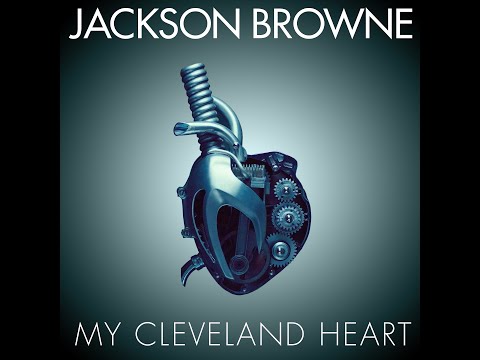
“My Cleveland Heart,” one of the pre-release tracks, bursts with heart and soul and an undeniable hook. Its quirky music video features none other than Phoebe Bridgers in an unexpected cameo:
As Browne told Rolling Stone, he was inspired by Bridgers’ own music video for “I Know the End,” one of the most crucial cuts on her excellent 2020 album Punisher. That video was directed by Alissa Torvinen, whom Browne reached out to when conceptualizing a video for “My Cleveland Heart”:
“It was the most fun I’ve ever had making a video,” he says. “I’m a big fan of Phoebe, so I picked Alissa. And then it was really sort of in the last days of planning that someone said, ‘Phoebe could be one of these nurses.’ From there, it was pretty much improvised.”
As for the Bridgers cameo, Browne offered up this bit of biting wit:
“I thought it was really appropriate to take out my worn-out, useless heart and hand it to Phoebe,” he said. “Who better to hand [it] to than somebody young, strong, and possibly as cynical as me?”
It’s that sort of spark that makes the music on Downhill from Everywhere as engaging as it is.
“Minutes to Downtown” has an urgency to it, a bass groove pairing with pianos and a guitar line that work together to accentuate Browne’s lyrics about the flow of time and being “forever on this freeway, dreaming of my getaway”:
The title track incorporates Browne’s expressive activism into song form, and it’s one of the record’s standouts:
Downhill from God’s golden shore
Downhill from the grocery store
Downhill from the center floor
K Street, and the never-ending war
Downhill from everywhere
Downhill from all you see
The ocean is the last stop for gravity
Downhill from here
Downhill from everywhere
All mankind’s ambition and validityhttps://www.youtube.com/embed/pxbB9EWM-Ks
“Until Justice is Real” asks us to do what we can to enact change and make things better for ourselves, a thinly veiled commentary on the state of things in the world today:
Ain’t on your TV, ain’t on your phone
You want the truth you got to find it on your own
It may not be that easy to see
The truth will cost you in the land of the free
It’s a good question to be asking yourself
What is the good life, what is wealth?
What is the future I’m trying to see?
What does that future need from me?https://www.youtube.com/embed/4wnw7EescQo
Downhill from Everywhere has a little bit of everything for fans of Jackson Browne. Topical, heart-on-sleeve lyricism, engaging guitar work and a vibrant energy are at work on every track, and it adds up to a stellar addition to his versatile catalog of music.
Link to Article Out Now: Stream Jackson Browne’s Inspired and Focused New Album ‘Downhill from Everywhere’